詳解java代碼中init method和destroy method的三種使用方式
在java的實際開發(fā)過程中,我們可能常常需要使用到init method和destroy method,比如初始化一個對象(bean)后立即初始化(加載)一些數(shù)據(jù),在銷毀一個對象之前進行垃圾回收等等。
周末對這兩個方法進行了一點學習和整理,倒也不是專門為了這兩個方法,而是在鞏固spring相關(guān)知識的時候提到了,然后感覺自己并不是很熟悉這個,便好好的了解一下。
根據(jù)特意的去了解后,發(fā)現(xiàn)實際上可以有三種方式來實現(xiàn)init method和destroy method。
要用這兩個方法,自然先要知道這兩個方法究竟是干嘛用的。而從字面意思就很容易理解,一個是加載,一個是銷毀。 下邊就正式代碼演示三種創(chuàng)建方式:
一、@Bean注解方式:
首先要創(chuàng)建一個至少擁有兩個方法的類,一個方法充當init method,另一個充當destroy method。
package springTest2;public class Test1 { public void init() { System.out.println('this is init method1'); } public Test1() { super(); System.out.println('構(gòu)造函數(shù)1'); } public void destroy() { System.out.println('this is destroy method1'); }}
這里很顯然只是一個普通的java類,擁有一個無參構(gòu)造和另外兩個方法。
需要注意的是,這里的init和destroy兩個方法名實際上是可以隨意取得,不叫這個也沒有問題,只不過算是一種約定俗稱,一般都是這樣叫。
另外我們也知道,這個構(gòu)造方法也是可以不要的,因為會隱式的自動創(chuàng)建,但是為了更清楚的看到init和destroy是什么時候執(zhí)行,我們就顯示的寫出來。
創(chuàng)建好了這個類,我們就可以使用@Bean注解的方式指定兩個方法,以讓他們生效。
package springTest2;import org.springframework.context.annotation.Bean;import org.springframework.context.annotation.ComponentScan;import org.springframework.context.annotation.Configuration;@Configuration@ComponentScan('springTest2')public class ConfigTest { @Bean(initMethod = 'init', destroyMethod = 'destroy') Test1 test1() { return new Test1(); }}
這里邊的@Configguration注解是告訴spring這個類是一個配置類,相當于我們的xml文件,@ComponentScan則是指定需要spring來掃描的包,相當于xml中的context:component-scan屬性。
而@Bean后邊的initMethod和destroyMethod就是在聲明這是一個baen的同時指定了init和destroy方法,方法名從功能實現(xiàn)上來說可以隨意。
到這里我們就已經(jīng)用第一種方式寫好了,為了驗證成功與否,再寫一個main方法驗證一下:
package springTest2;import org.springframework.context.annotation.AnnotationConfigApplicationContext;public class MainTest { public static void main(String[] args) { AnnotationConfigApplicationContext context = new AnnotationConfigApplicationContext(ConfigTest.class);System.out.println('#################################'); context.close(); }}
運行之后結(jié)果如圖:
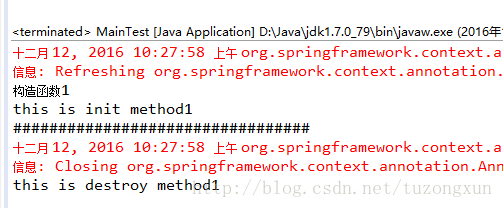
根據(jù)打印順序可以看到,首先是構(gòu)造函數(shù),也就是創(chuàng)建了bean,緊接著執(zhí)行了init,然后再context.close要銷毀bean之前又執(zhí)行了destroy。
二、JSR-250注解的方式(需要導入jsr250-api的jar包):
首先依然是創(chuàng)建一個擁有構(gòu)造方法在內(nèi)的三個方法的java類:
package springTest2;import javax.annotation.PostConstruct;import javax.annotation.PreDestroy;public class Test2 { @PostConstruct public void init() { System.out.println('this is init method2'); } public Test2() { super(); System.out.println('構(gòu)造函數(shù)2'); } @PreDestroy public void destroy() { System.out.println('this is destroy method2'); }}
很顯然,這里和上一個類不同的是,在init和destroy方法上加入了兩個注解,@PostConstruct和上邊@Bean后的initMethod相同,而@PreDestroy則是和destroyMethod做用相同。 既然這里有了區(qū)別,已經(jīng)指定了init method和destroy method,那么后邊聲明bean的時候自然也會有不同,也就不需要再指定一遍:
package springTest2;import org.springframework.context.annotation.Bean;import org.springframework.context.annotation.ComponentScan;import org.springframework.context.annotation.Configuration;@Configuration@ComponentScan('springTest2')public class ConfigTest { @Bean Test2 test2() { return new Test2(); }}
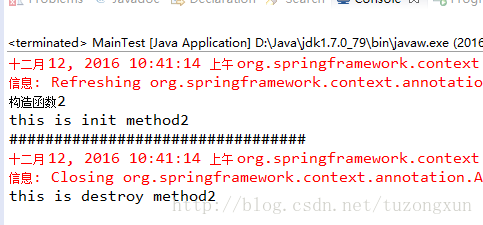
所以,如上代碼中只需要簡單的聲明這是一個bean就可以了,類上邊的兩個注解和上一個例子中的意思相同。 再測試一下:
package springTest2;import org.springframework.context.annotation.AnnotationConfigApplicationContext;public class MainTest { public static void main(String[] args) { AnnotationConfigApplicationContext context = new AnnotationConfigApplicationContext(ConfigTest.class);System.out.println('#################################'); context.close(); }}
結(jié)果如下:
三、xml配置的方式:
這種方式實際上是和第一種對應的,只不過細節(jié)上略有改變而已,首先,創(chuàng)建的java類完全一樣:
package springTest2;public class Test3 { public void init() { System.out.println('this is init method3'); } public Test3() { super(); System.out.println('構(gòu)造函數(shù)3'); } public void destroy() { System.out.println('this is destroy method3'); } public void test() { System.out.println('testttttttt'); }}
不同的地方就在于,第一個例子中是使用注解告訴spring這個類相當于一個配置文件,而這里則是實實在在的配置文件spring.xml:
<?xml version='1.0' encoding='UTF-8'?> <beans xmlns='http://www.springframework.org/schema/beans' xmlns:xsi='http://www.w3.org/2001/XMLSchema-instance' xsi:schemaLocation='http://www.springframework.org/schema/beans http://www.springframework.org/schema/beans/spring-beans.xsd'> <bean init-method='init' destroy-method='destroy'></bean></beans>
這個配置大概也能算是spring.xml中最簡單的一個配置了吧,除開必要的文件頭,就只有一個bean,而且bean里邊也只有id,calss和init以及destroy方法。
因為簡單,所以一目了然,id只是為了其他地方引用,class是指定這個bean對應的類,而后邊兩個屬性則和用@Bean聲明時一模一樣。
因為這里聲明bean和指定兩個方法是用的xml配置,因此在測試的時候也就需要稍微有一點點改變:
package springTest2;import org.springframework.context.support.ClassPathXmlApplicationContext;public class MainTest { public static void main(String[] args) { ClassPathXmlApplicationContext context1 = new ClassPathXmlApplicationContext('spring.xml'); System.out.println('#################################'); context1.close(); }}
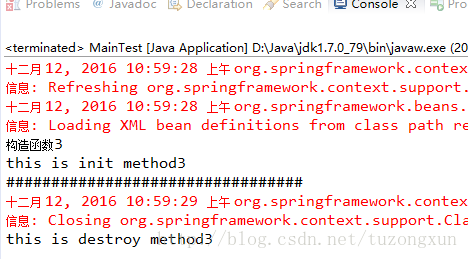
區(qū)別在于這里直接加載了配置文件,而不是java類,使用的是ClassPathxXmlApplicationContext而不是AnnotationConfigApplicationContext。
結(jié)果如下:
這里需要說明的一點是,在實際的web應用使用時,可以在web.xml中使用類似下邊的配置來加載bean,實現(xiàn)init method:
<servlet-name>dispatcher</servlet-name> <servlet-class>org.springframework.web.servlet.DispatcherServlet</servlet-class> <init-param> <param-name>contextConfigLocation</param-name> <param-value>classpath:spring.xml</param-value> </init-param> <load-on-startup>1</load-on-startup> </servlet> <servlet-mapping> <servlet-name>dispatcher</servlet-name> <url-pattern>/</url-pattern> </servlet-mapping>
然后啟動tomcat結(jié)果如下:
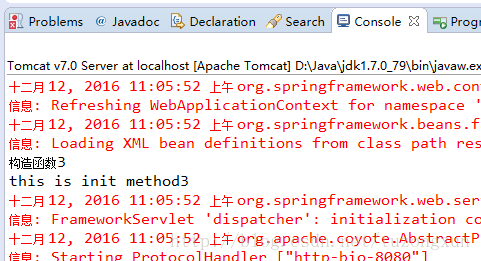
這里邊沒有調(diào)用destroy method,原因是spring本身代碼就需要我們手動調(diào)用銷毀bean的方法,像前邊的幾個例子中的context.close就是。
如果不手動調(diào)用這個方法,bean就不會被銷毀,也就不會去調(diào)用destroy method,這也就是為何這里在web.xml中配置后,啟動tomcat 只打印了構(gòu)造函數(shù)和init方法中的內(nèi)容。
例子都是很簡單的,而通過簡單的例子對比可能能更進一步理解相關(guān)的知識,理解了才能在實際應用中更好的進行選擇和集成。
到此這篇關(guān)于詳解java代碼中init method和destroy method的三種使用方式的文章就介紹到這了,更多相關(guān)java中init method和destroy method內(nèi)容請搜索好吧啦網(wǎng)以前的文章或繼續(xù)瀏覽下面的相關(guān)文章希望大家以后多多支持好吧啦網(wǎng)!
相關(guān)文章:
1. 基于javaweb+jsp實現(xiàn)學生宿舍管理系統(tǒng)2. 多級聯(lián)動下拉選擇框,動態(tài)獲取下一級3. ASP.NET MVC實現(xiàn)樹形導航菜單4. 如何封裝一個Ajax函數(shù)5. Java 接口和抽象類的區(qū)別詳解6. Laravel Eloquent ORM高級部分解析7. IDEA 搭建maven 安裝、下載、配置的圖文教程詳解8. jsp response.sendRedirect()用法詳解9. Spring security 自定義過濾器實現(xiàn)Json參數(shù)傳遞并兼容表單參數(shù)(實例代碼)10. PHP擴展之URL編碼、解碼及解析——URLs

 網(wǎng)公網(wǎng)安備